

From Toilets to Semiconductors: 25 Years of Leadership, Development and India’s Growing Confidence
October 7, 2001. A new chapter in Indian political history began when Narendra Modi took oath as the Chief Minister of Gujarat. Twenty-five years later, on October 7, 2026, that journey reached a remarkable milestone. From leading a state to becoming the Prime Minister of the world’s largest democracy, Modi’s years in public office have coincided with significant changes in India’s development priorities, governance, infrastructure, technology and international standing.
The journey from Gujarat to New Delhi is more than a story of political continuity. It is also a story of an evolving vision for India.
In 2014, when Modi became Prime Minister, one of the country’s major priorities was to ensure basic sanitation facilities for every household. By 2026, India is making determined progress in semiconductor manufacturing and advanced technology. The contrast between toilets and semiconductors captures the remarkable range of development challenges India has sought to address—from essential services at the grassroots to participation in the industries shaping the future.
From Ideology to Governance
To understand Narendra Modi’s political journey, it is important to recognise the organisational and ideological background from which he emerged. His years of association with the Rashtriya Swayamsevak Sangh (RSS), followed by his work within the wider political movement that led to the Bharatiya Janata Party (BJP), shaped his approach to public life, organisation and nation-building.
One idea that has remained central to this approach is Antyodaya—the principle that development must reach the last person in society, particularly those who are economically and socially disadvantaged.
During his tenure as Gujarat’s Chief Minister, emphasis was placed on infrastructure, industrial investment, electricity, irrigation and the use of technology in administration. When he entered national politics in 2014, he presented a broader vision of taking development and improved governance to every part of the country.
The 2014 general election gave the BJP 282 seats, while the National Democratic Alliance (NDA) secured 336 seats. It was the first time in three decades that a single party had won an outright majority in the Lok Sabha. On May 26, 2014, Narendra Modi took oath as the 14th Prime Minister of India.
Taking Development to Every Household
In 2014, India faced significant gaps in access to basic services, including sanitation, banking, clean cooking fuel, drinking water and healthcare. The challenge was not merely to announce development programmes, but to ensure that their benefits reached ordinary citizens.
Several major initiatives were introduced or expanded with this objective.
The Swachh Bharat Mission placed sanitation and cleanliness at the centre of national public awareness. The Pradhan Mantri Jan Dhan Yojana brought millions of previously unbanked citizens into the formal banking system. The Ujjwala Yojana sought to provide cleaner cooking fuel to women from economically disadvantaged households. Ayushman Bharat expanded access to health protection for eligible families, while the Jal Jeevan Mission focused on providing tap-water connections to rural households.
Other initiatives, including the Pradhan Mantri Awas Yojana, PM-KISAN, Direct Benefit Transfer and Digital India, addressed housing, agricultural support, financial assistance and access to public services.
An important aspect of these initiatives has been the growing use of digital systems to deliver government benefits directly into beneficiaries’ bank accounts. This has helped reduce dependence on intermediaries and strengthened the infrastructure through which welfare assistance is delivered.
The significance of these programmes lies not only in their scale but also in their intended impact on everyday life. Development becomes meaningful when it reaches the home, the village, the farmer, the worker and the family that needs it most.
The Evolution of a Slogan: From Sabka Saath to Sabka Prayas
One of the most meaningful aspects of Narendra Modi’s political philosophy is the evolution of the slogan:
“Sabka Saath, Sabka Vikas”
It later developed into:
“Sabka Saath, Sabka Vikas, Sabka Vishwas, Sabka Prayas.”
These words represent more than a political slogan. They express a progression in the responsibilities of leadership and the role of citizens in nation-building.
Sabka Saath means standing with everyone and taking everyone along. It is an assurance from the leadership that no section of society should be left behind. The emphasis is on togetherness and inclusion.
Sabka Vikas means development for everyone. The purpose of bringing people together is to ensure that the benefits of progress reach all sections of society, rather than remaining confined to a privileged few.
Sabka Vishwas means earning everyone’s trust. Development and governance require public confidence. People must have faith in institutions, policies and the direction in which the country is moving.
Sabka Prayas means everyone’s collective effort. As the national vision becomes more ambitious, the responsibility cannot rest with the government alone. Every citizen, institution, community, business and organisation has a role to play in the country’s progress.
There is an important distinction between Saath and Prayas. Saath is the assurance of leadership to stand with everyone and take everyone along. Prayas is the call for everyone to contribute through their own effort.
The progression is significant: bring everyone together, ensure development for all, earn public trust and then mobilise the collective efforts of the nation.
It is a vision in which the government provides direction and opportunity, while citizens become active participants in the journey of national development.
Electoral Mandates and Democratic Responsibility
The 2019 general election strengthened the BJP’s position, with the party winning 303 seats. In 2024, the BJP secured 240 seats, while the NDA won 293 seats and formed the government once again. On June 9, 2024, Narendra Modi was sworn in as Prime Minister for a third consecutive term.
With this, he became the second Prime Minister after Jawaharlal Nehru to lead the country through three consecutive general elections and terms in office.
In a democracy, every election is both a mandate and a responsibility. Electoral victories reflect public confidence, but they also bring renewed expectations and the responsibility to address the country’s challenges.
Building India into a Manufacturing Powerhouse
A country’s economic strength cannot be measured only by what it consumes. Its ability to manufacture, innovate, develop technology and export products is equally important.
India’s electronics manufacturing sector has witnessed substantial expansion. According to government figures, electronics production increased from approximately ₹1.9 lakh crore in 2014–15 to ₹13.11 lakh crore in 2025–26. Mobile phone production grew from around ₹18,000 crore to approximately ₹6.27 lakh crore during the same period. India has emerged as the world’s second-largest mobile phone manufacturer.
The next major frontier is semiconductor manufacturing.
Semiconductors are essential to modern life. They power smartphones, automobiles, computers, communication networks, defence systems and artificial intelligence technologies. Countries that develop strong semiconductor capabilities will have an important advantage in the industries of the future.
India has approved ten semiconductor projects involving investment commitments of approximately ₹1.6 lakh crore. These projects cover different parts of the semiconductor ecosystem, including fabrication, assembly, testing and packaging.
India has not yet achieved complete self-sufficiency in semiconductor manufacturing. However, the foundations of a domestic industry are being developed, with the ambition of making India a significant participant in global technology supply chains.
The Atmanirbhar Bharat vision is closely connected to this ambition. It does not mean withdrawing from the world. Rather, it means strengthening India’s domestic capabilities so that the country can engage with the world from a position of greater confidence and economic strength.
Strengthening Indigenous Defence Capabilities
India’s defence sector has also undergone a significant transformation. For many years, the country depended heavily on imports for several categories of military equipment. Today, the emphasis is increasingly on domestic design, manufacturing, research, innovation and exports.
India’s defence exports reached a record ₹38,424 crore in the financial year 2025–26, compared with ₹686 crore in 2013–14. Defence production also reached a record ₹1.78 lakh crore in 2025–26. Indian defence products are now being exported to more than 80 countries.
The growth of the domestic defence industry has involved public-sector undertakings, private manufacturers, start-ups, research institutions and a wider network of supporting industries.
A strong defence ecosystem is not simply about possessing advanced weapons. It is also about having the national capability to design, manufacture, maintain and upgrade those systems. Indigenous manufacturing strengthens strategic independence, creates skilled employment and contributes to technological development.
For a country with India’s security responsibilities and geopolitical position, this is an important national priority.
Infrastructure, Digital Transformation and Green Energy
Infrastructure is one of the foundations of economic growth. Roads, national highways, railways, airports, ports, waterways and logistics networks influence how efficiently people, goods and services move across the country.
India has made substantial investments in these areas, while digital infrastructure has opened new possibilities for financial transactions and public services.
The Unified Payments Interface (UPI) has become one of India’s most recognised digital public platforms. It has transformed everyday payments and demonstrated how technology can be used at a national scale. The Goods and Services Tax (GST), despite the adjustments and challenges involved in its implementation, was a major step towards a more unified indirect tax framework.
India’s energy transition is another important part of its development story. Renewable energy installed capacity increased from 76.38 GW in 2014 to 288.58 GW by June 30, 2026. Solar and wind power have become increasingly important components of the country’s energy strategy.
The expansion of renewable energy is not only an environmental priority. It is also connected to energy security, investment, industrial development and the needs of future generations.
National Security and Internal Stability
Economic progress requires peace, stability and security. India continues to face challenges relating to terrorism, border security, cyber threats and organised crime. Addressing these concerns requires strong institutions, modern capabilities and cooperation between the Centre and the States.
One important development has been the reduction in areas officially categorised as affected by Left-Wing Extremism. According to the Ministry of Home Affairs, the number of LWE-affected districts declined from 126 in 2018 to zero by March 2026.
This is a significant milestone. However, consolidating peace in previously affected areas requires continued security vigilance, infrastructure development and access to education, healthcare and economic opportunities.
The larger lesson is that security and development must work together. Lasting peace is strengthened when people have confidence in governance and meaningful opportunities to improve their lives.
India’s Global Role: From Participation to Greater Influence
The COVID-19 pandemic tested the capacity of governments across the world. India faced the enormous task of protecting a population of more than a billion people while maintaining essential services and supporting its healthcare system.
The country administered more than 220 crore vaccine doses domestically. Through the Vaccine Maitri initiative, India also supplied vaccines to several countries and international organisations. The effort demonstrated the importance of domestic vaccine manufacturing and India’s ability to contribute to international public health efforts during a global emergency.
India’s diplomatic engagement has also become more visible on the world stage.
The 2023 G20 Summit in New Delhi was a major moment in India’s international diplomacy. The inclusion of the African Union as a permanent member of the G20 was an important outcome, giving the African continent a stronger voice in the forum. India’s efforts to highlight the concerns of the Global South also received considerable attention.
The journey from the diplomatic difficulties Narendra Modi faced in 2005, when the United States denied him a diplomatic visa, to his later engagement with world leaders as Prime Minister reflects a wider change in India’s international profile.
The 2019 Howdy Modi event in Houston and India’s growing engagement with major global powers are examples of this increased visibility. India’s foreign policy has sought to maintain relationships across different geopolitical groupings while safeguarding national interests.
The international honours conferred on Prime Minister Modi by several countries are also part of this diplomatic story. Ultimately, however, the standing of a nation is measured not merely by the awards received by its leaders, but by the respect given to its voice, interests and contributions.
Viksit Bharat 2047: A National Mission
India’s ambition to become a developed nation by 2047, the centenary of its Independence, is expressed through the vision of Viksit Bharat 2047.
This is a long-term national aspiration that extends beyond the tenure of any one government. It requires sustained progress in education, healthcare, infrastructure, manufacturing, agriculture, research, innovation, environmental sustainability and good governance.
India’s young population, entrepreneurial spirit, technological talent, industrial potential and cultural heritage offer significant opportunities. Turning these strengths into lasting national progress will require the participation of governments, businesses, educational institutions, communities and individual citizens.
This is where Sabka Prayas becomes especially relevant. A developed India cannot be built by the government alone. It requires the collective commitment and contribution of its people.
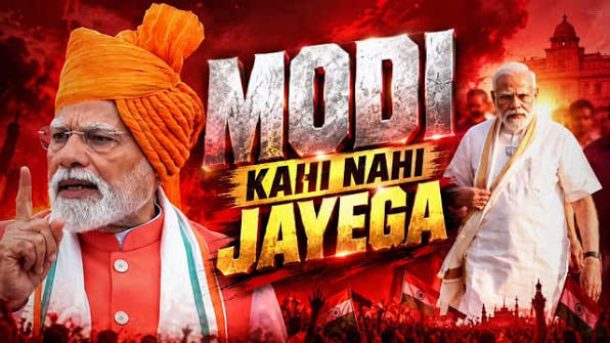
Modi Kahi Nahi Jayega!
The 25-year journey of Narendra Modi in public office is a significant chapter in contemporary Indian political history. It began in Gujarat and expanded to the national stage, encompassing major changes in welfare delivery, infrastructure, manufacturing, digital technology, defence production and India’s international engagement.
No democratic leader’s record is beyond evaluation. Achievements, challenges and unfinished responsibilities are all part of public life. But the scale and continuity of this 25-year journey make it a milestone worth reflecting upon.
There was a time when the political and development discourse centred on the Gujarat Model. Today, the conversation has moved to a much larger stage. The world is increasingly looking at the India Model—India’s approach to digital public infrastructure, large-scale welfare delivery, economic growth, indigenous manufacturing, technological advancement and its growing role in global affairs.
The journey from the Gujarat Model to the India Model represents more than the expansion of a political vision. It reflects the growing confidence of a nation that aspires not merely to follow global developments, but to shape them.
Political offices have constitutional terms. Governments change through democratic processes. Yet the place a leader occupies in the hearts and minds of people can extend beyond the duration of any official position. When a leader becomes closely associated with the aspirations, experiences and confidence of millions, that connection can become part of a country’s political and public memory.
And so, with conviction, one can say:
“Modi Kahi Nahi Jayega!”
He is not going anywhere. He will continue to live in the hearts of millions of Indians. Political positions and terms of office may eventually come to an end, but the emotional connection built with people and the aspirations associated with an era can endure.
From the Gujarat Model to the India Model, the journey continues. And that is the deeper meaning and spirit of “Modi Kahi Nahi Jayega!”


